Gaztelugatxe Access Rules and the 241 Steps: How the Visit Works
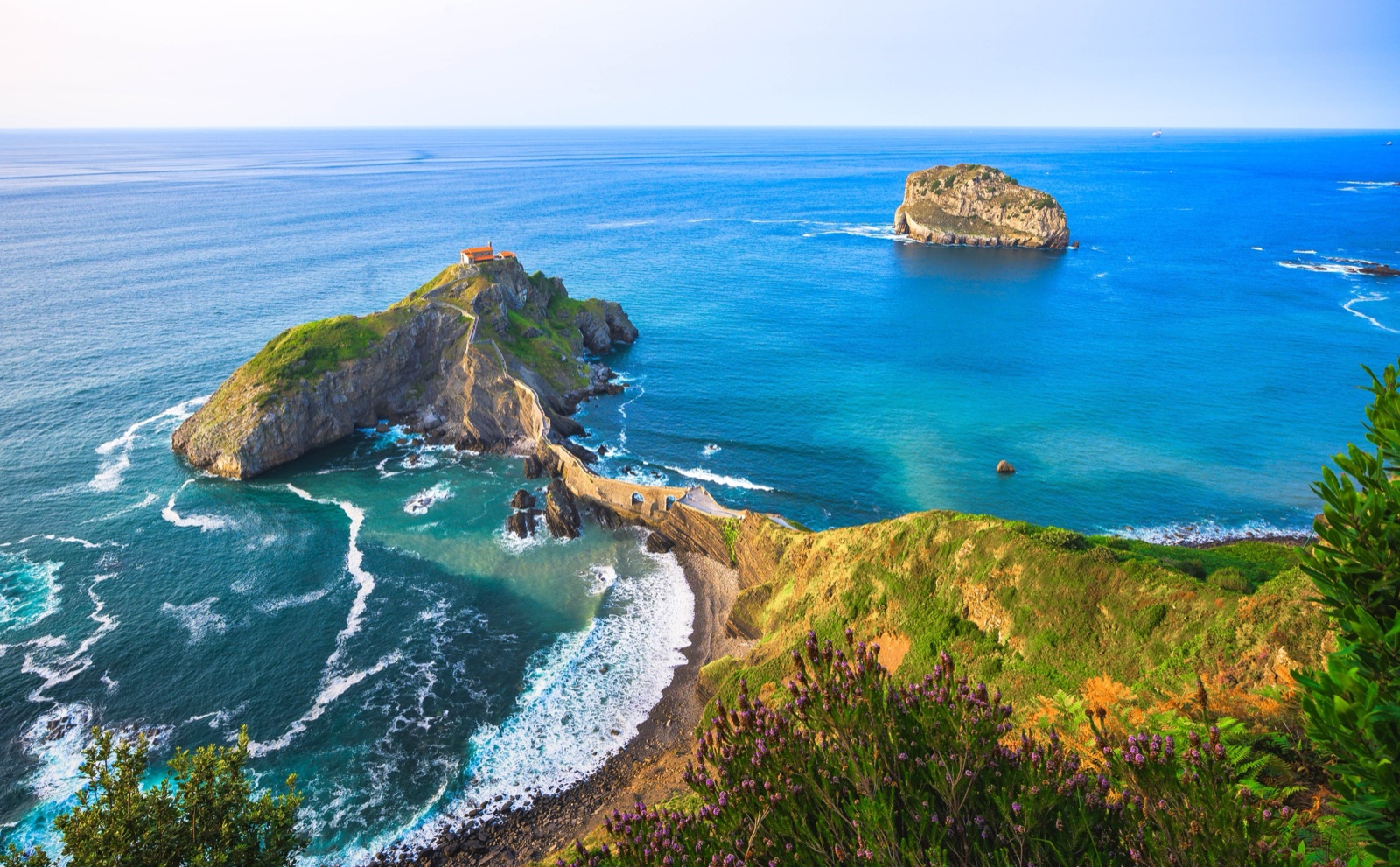
The view of San Juan de Gaztelugatxe from above — a rocky islet, a stone bridge and a stairway zigzagging up to a tiny hermitage — is one of the great images of the Basque coast. Walking it is a different matter. There is a descent from the road, a bridge, 241 steps to the top, and the whole way back again. On busy days access is controlled, and you need a free ticket before you set out.
None of it is difficult if you know what to expect. This guide explains the access rules, the two routes down, the steps and the hermitage, and how to plan the walk so that you enjoy it rather than race it.
The access rules in brief
- Access is free.
- On days with controlled access, you need a free ticket booked online. You show it to staff at the access point.
- On other days, access is free, with no booking or ticket.
- On controlled days, a maximum of 1,462 people are allowed per day.
- The calendar changes through the year. In 2026, access became free again from 21 September, but some controlled-access days are set for the following months — check the published schedule for your date.
The system exists to regulate the number of visitors and protect the natural area. For you, it means one simple rule: check the calendar before you go, and book the free ticket if your date is a controlled day.
Booking the free ticket
On a controlled day, the free ticket is not optional: staff at the access point check it. Book it online before you travel, keep it on your phone, and treat it like any other timed booking.
A few practical points:
- Book early in busy periods. With a cap of 1,462 people a day, popular days can fill.
- Book for everyone in your group. Each visitor needs a ticket.
- Plan your arrival around your ticket. Allow for parking or the bus stop, and for the walk from the road to the access point.
- On free days, there is nothing to book. You can simply arrive and walk down.
Getting to the start of the walk
The walk begins on the road above the coast, and there are two ways to reach it without a tour.
- By bus: from Bilbao’s Termibus station, bus A3527 (Bilbao–Mungia–Bermeo) stops at San Juan de Gaztelugatxe. Bus A3518 (Bilbao–Mungia–Bakio) is an alternative, combined with the summer Bakio–Bermeo bus, or in winter, on weekdays only, with the Taxibus.
- By car: the BI-3101 runs along the coast above the islet, with the three car parks described above.
Our guide to getting to Gaztelugatxe compares all the options, including tours from Bilbao and San Sebastián.
The two routes down
From the road above the coast, two walking routes lead down to the islet.
The Urizarreta route
The Urizarreta route is the most direct and popular. It starts near the Eneperi restaurant, close to the largest car park, and heads down towards the bridge. If you are arriving by car and parking near the restaurant, this is the obvious choice.
The Ermu route
The Ermu route is longer, but it has no steps until the bridge. It starts near the Ermu access control, close to the car park by the Lurgorri area, about 15 minutes’ walk away. It is a good option if you want a gentler descent, or if the car parks near Eneperi are full.
The distance
The walk is about 1.3 km, short but including a long section of steps. It is not far, but it is not flat: you descend to the coast, cross the bridge and climb the islet, then do it all in reverse.
The bridge and the 241 steps
At the bottom of the path, a stone bridge joins the mainland to the islet. From the bridge, a stairway of 241 steps zigzags up to the hermitage. Whichever route you take, the 241 steps are unavoidable.
The steps are the heart of the experience. They climb steeply along the spine of the islet, with the sea on both sides and the cliffs of the coast behind you, and each turn opens a new view. Take them at your own pace, and stop as often as you like; there is no prize for speed.
Tips for the steps
- Wear shoes with a good grip. The steps can be slippery, especially after rain or in sea spray.
- Go steadily. The climb is steep in places, and the descent is harder on the knees than the ascent.
- Keep to one side on busy days so that people can pass in both directions.
- Hold small children’s hands. The steps and the bridge are exposed.
- Stop to look. The views from the steps are as good as the view from the top.
The hermitage at the top
The hermitage stands on the highest point of the islet. The first hermitage is believed to date from the ninth century, and the present church has been rebuilt many times after fires and battles over the centuries.
At the top, tradition says you should ring the hermitage bell three times for good luck and to ward off evil spirits. Almost everyone does, and the sound of the bell drifting down the steps is part of the atmosphere of the place.
Take time at the top. The views along the coast, down to the bridge and out over the Cantabrian Sea are the reward for the climb, and the walk back is easier if you have rested.
How long to allow
The walk itself is short, but the time adds up: the descent from the road, the bridge, the 241 steps up, time at the top, the steps down, and the climb back up to the road. Allow at least a couple of hours, and more if you like to stop for photographs or are walking with children.
That is why the tour from Bilbao designed for the climb gives two free hours at the islet. Tours that stop for less may leave you time only for the view from above.
The climb back up
This is the part many visitors underestimate. After the descent, the bridge, the 241 steps up and the 241 steps down, you still have to climb back up from the coast to the road. On a warm day, it is the hardest part of the visit.
- Save some energy. Don’t rush the steps on the islet if you know the climb back is waiting.
- Carry water. There is little to buy on the way.
- Rest at the top of the islet before you start back.
- Choose your route back. If the Urizarreta route felt steep, the Ermu route has no steps until the bridge — though it is longer.
Parking for the walk
The car park you choose affects the walk:
- The small car park of about 25 spaces by the BI-3101 is about 200 metres from the Urizarreta access control.
- The largest and closest car park, by the Eneperi restaurant, is private and paid, and sits at the start of the Urizarreta route.
- The car park by the Lurgorri area is near the Ermu access control, about 15 minutes’ walk away.
Together they hold about 250 cars. On busy days they fill quickly, so arrive early.
Visiting in different seasons
- In summer, controlled access is most likely, parking is busiest and the climb back up is hottest. Go early, book your ticket and carry water.
- In spring and autumn, the calendar may still include controlled days; check before you go. The walk is often more comfortable.
- In winter, access is more often free, but the weather is less predictable, the steps can be wet and the islet is exposed to wind from the sea. The Bakio–Bermeo connecting bus is a summer service; in winter the Taxibus runs on weekdays only.
With an audio guide or a tour
The provincial council of Bizkaia offers an audio guide for the visit, which is a good companion if you are walking on your own.
If you would rather go with a guide, the options include:
- From Bilbao with time for the steps — a direct transfer with two free hours at the islet, then Bermeo and Gernika, in about 6 hours.
- A small-group half day with a coastal walk — Gaztelugatxe paired with a walk along the Basque coast, in about 3.5 hours, with a local guide.
The tours page compares them.
A visit, step by step
- Check the calendar a few days before, and again the day before. If your date is a controlled-access day, book the free ticket online for everyone in your group.
- Arrive early. Whether by car or bus, the first part of the day is the easiest for parking and the quietest on the steps.
- Choose your route. The Urizarreta route from near the Eneperi restaurant is the most direct; the Ermu route is longer with no steps until the bridge.
- Show your ticket at the access point on controlled days.
- Walk down to the coast and cross the stone bridge onto the islet.
- Climb the 241 steps at your own pace, stopping for the views.
- Ring the bell three times at the hermitage, and rest at the top.
- Walk back down the steps, cross the bridge and climb back up to the road, saving energy for the final ascent.
Photographs
Gaztelugatxe is one of the best-known sights on the Basque coast, and a few spots stand out for photographs:
- From the paths above, before you descend: the classic view of the whole islet, the bridge and the zigzagging steps.
- From the bridge, looking up at the stairway climbing the islet.
- From the steps, looking back along the coast and down to the bridge.
- From the top, with the hermitage and the open sea.
On a busy day, the steps are full of people; an early start gives you the best chance of clear shots.
What to bring
- Shoes with a good grip. The steps and the path can be slippery.
- Water, especially in warm weather. The climb back up is hard work.
- A layer and a waterproof. The islet is exposed to wind and sea spray.
- Sun protection in summer; there is little shade on the steps.
- Your free ticket on your phone if it is a controlled-access day.
- A small backpack, so your hands are free on the steps.
Respecting the site
San Juan de Gaztelugatxe sits in a protected natural area, and the access controls exist to preserve it as well as to manage the crowds. Stay on the paths and steps, take your litter home, keep noise down at the hermitage, and follow the instructions of the staff at the access points. The more visitors treat the site with care, the fewer restrictions everyone faces.
After the steps: the coast nearby
Once you have climbed back up to the road, the coast between Bakio and Bermeo is waiting. Bermeo, a fishing town a short distance away, is a natural place for lunch, and Mundaka and Gernika are a little further on. Our guide to day trips along the Basque coast looks at the combinations.
Visiting with children
Children often love Gaztelugatxe — the bridge, the stairway and the bell are all irresistible — but it is a real walk.
- Pace it. The 241 steps are manageable for most children who walk regularly, as long as nobody rushes.
- Hold hands on the bridge and the steps. Both are exposed, and the steps can be slippery.
- Promise the bell. Ringing it three times at the top is a great motivator.
- Plan the return. Tired legs on the climb back up from the coast are the most common problem; bring water and snacks, and rest at the top first.
- Consider the Ermu route for younger children if you want to avoid steps before the bridge; it is longer, but has no steps until you reach it.
Accessibility
The route is short, but it is not step-free. The 241 steps up the islet cannot be avoided, and the climb back up to the road is steep. The Ermu route avoids steps until the bridge, but it is longer. Visitors who cannot manage the steps can still enjoy the classic view of the islet and the bridge from the paths above.
Frequently asked questions
Do I need a ticket to visit Gaztelugatxe?
Only on controlled-access days, when you need a free ticket booked online and shown at the access point. On other days access is free with no booking.
How many people can visit Gaztelugatxe each day?
On controlled-access days, a maximum of 1,462 people a day.
When is access free in 2026?
From 21 September 2026 access became free again, but the calendar sets some controlled-access days in the following months, so check before you go.
How many steps are there at Gaztelugatxe?
241, climbing from the stone bridge to the hermitage at the top of the islet. They are unavoidable on both routes.
Which route should I take?
The Urizarreta route, starting near the Eneperi restaurant, is the most direct and popular. The Ermu route is longer but has no steps until the bridge.
Why do people ring the bell?
Tradition says ringing the hermitage bell three times brings good luck and wards off evil spirits.
How long does the visit take?
Allow at least a couple of hours for the walk down, the bridge, the 241 steps, time at the top and the climb back up.
Is there parking near the start of the walk?
Yes. The small car park of about 25 spaces by the BI-3101 is about 200 metres from the Urizarreta access control; the largest car park, by the Eneperi restaurant, is private and paid; and the Lurgorri car park is near the Ermu access control, about 15 minutes’ walk away.
Can I visit Gaztelugatxe in the rain?
You can, but take care: the steps can be slippery when wet, and the islet is exposed to wind and sea spray. Good shoes and a waterproof make a big difference.